
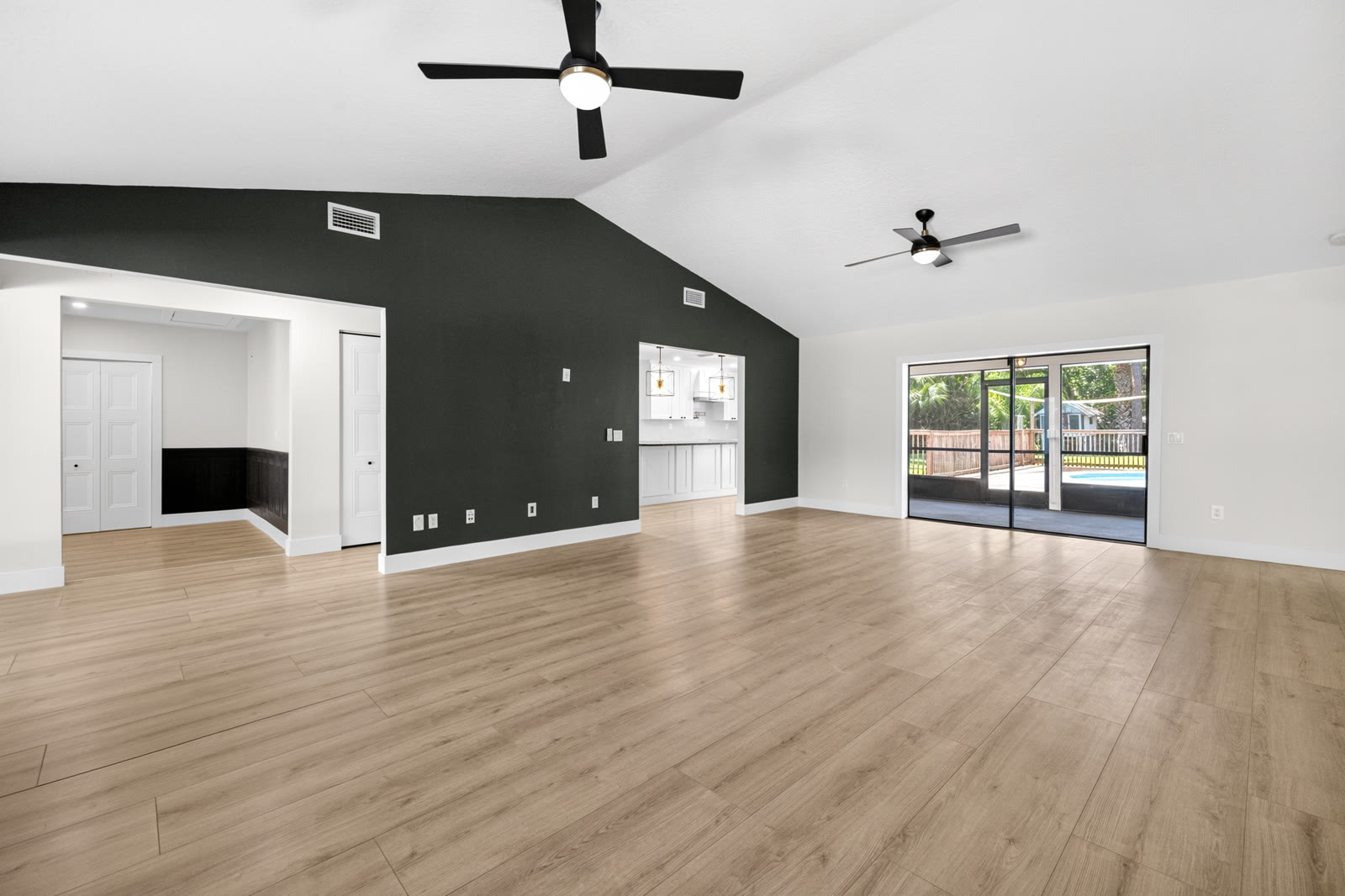
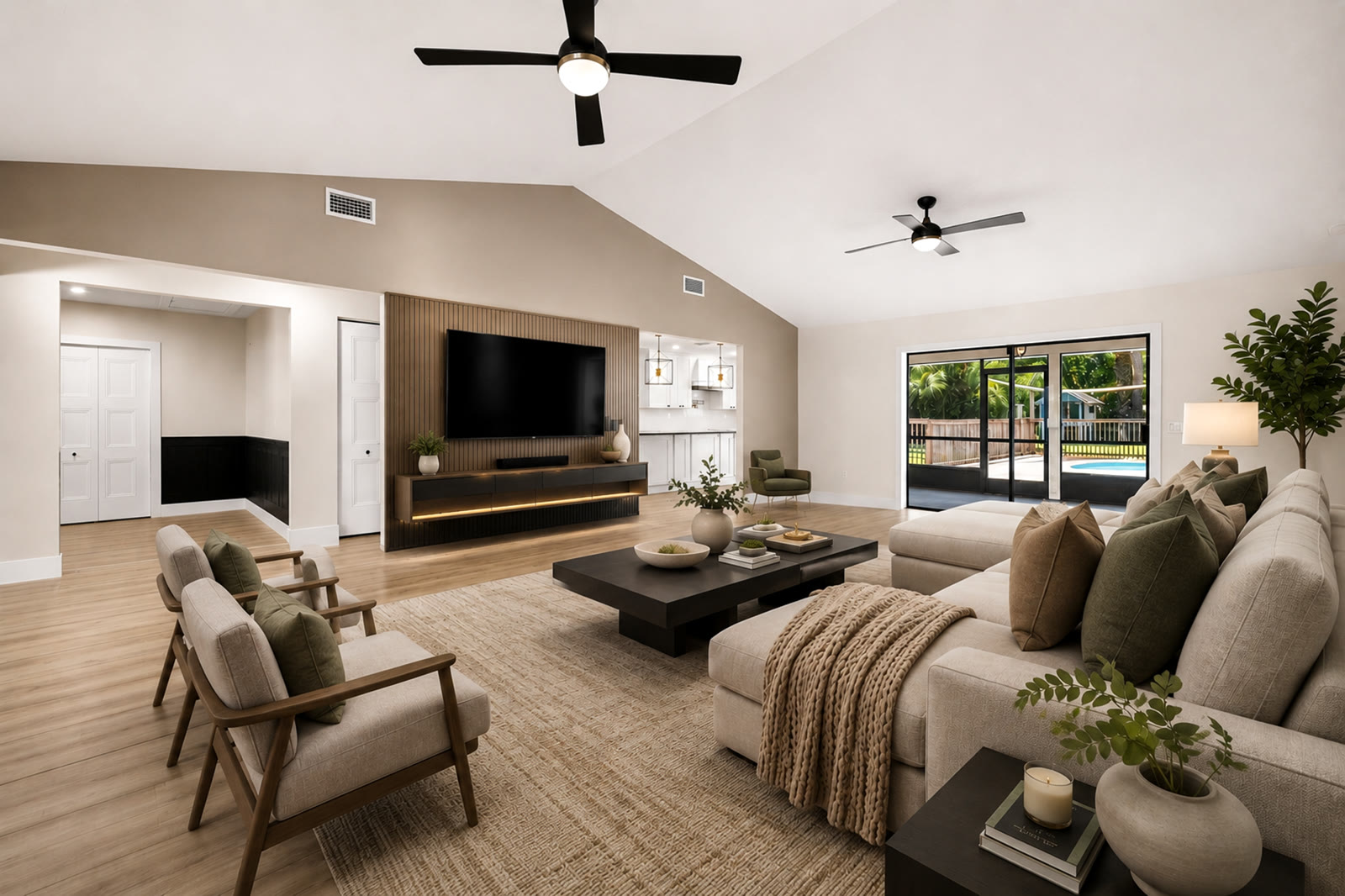
An empty room photographs honestly. It also photographs cold. On a $1.6 million listing in Jupiter Farms, the living room had the bones to sell itself: vaulted ceilings, a dark accent wall, wide-plank flooring, and a wall of glass looking out at the pool. What it didn't have, on shoot day, was furniture.
That's where virtual staging comes in. We shot the room clean and unfurnished, then built a fully furnished version digitally, without ever bringing a truck of rental furniture to the property.
Why we shoot it both ways
Some agents want the empty version for the MLS and the staged version for social and print. Some want both listed side by side to let buyers picture their own furniture in it. Either way, having both gives you options instead of locking you into one look for the life of the listing.
Virtual staging also solves a real logistics problem on a property like this one, out in Jupiter Farms, where the lots are large and the homes are often vacant between owners. Renting and moving physical furniture for a one-day shoot is expensive and slow. Digital staging gets you a photorealistic, fully furnished room in a matter of days, at a fraction of the cost.
Where virtual staging makes sense, and where it doesn't
It works best on vacant homes, new construction, and rooms with awkward proportions that are hard for buyers to read empty. It's not a fix for a room with real problems: bad light, poor layout, or finishes that need work. Staging sells the potential of a good room. It won't disguise a bad one.
The result
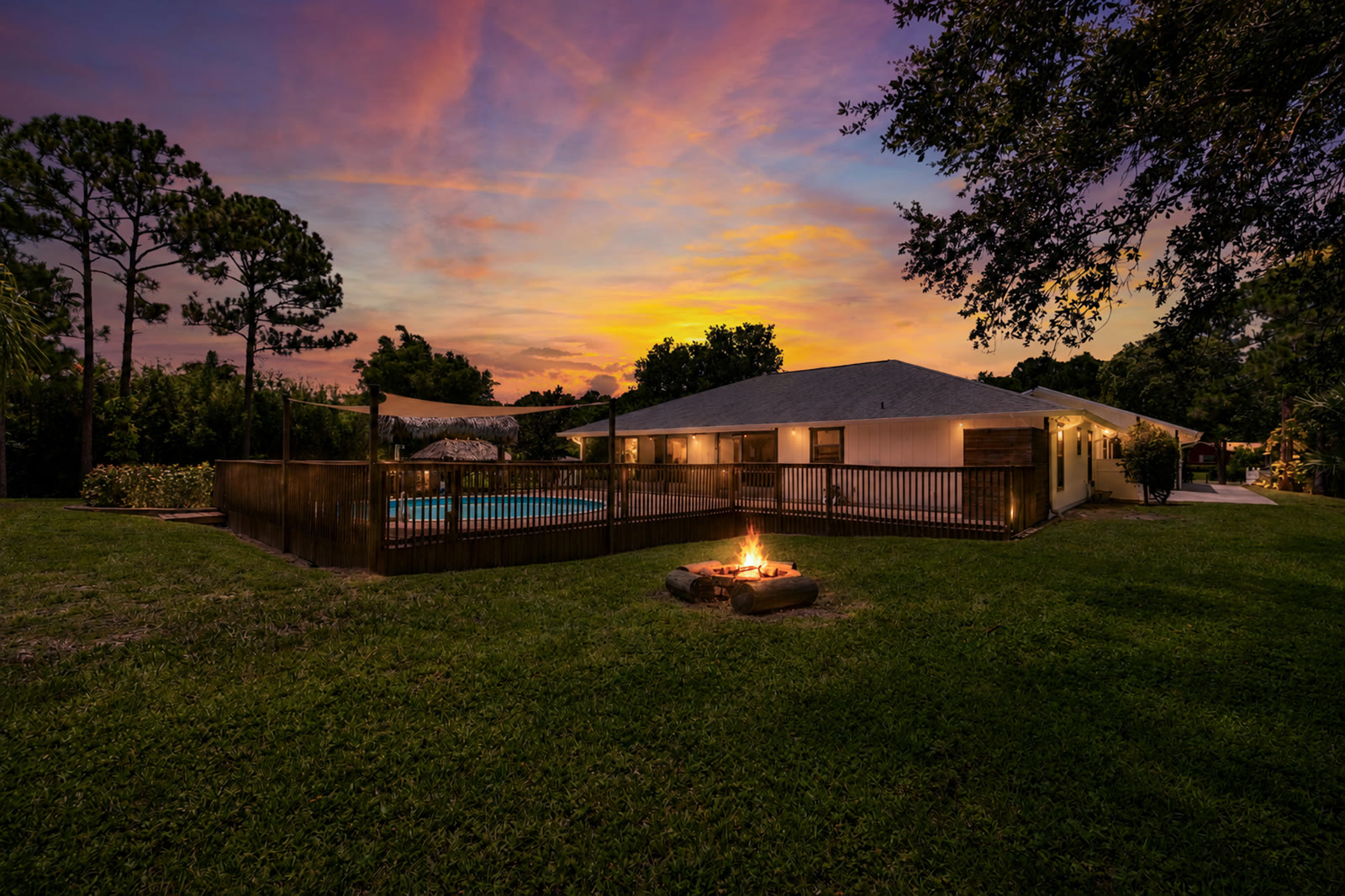
Paired with twilight photography for the exterior, this Jupiter Farms listing went out with both an honest, unfurnished set of MLS photos and a fully staged version for marketing, giving the agent flexibility without a second shoot.